Have you ever wondered how a simple combination of cobalt blue and white porcelain became one of China’s most influential cultural exports? Thousand years later, this story continues to shape art, design and global craftsmanship.
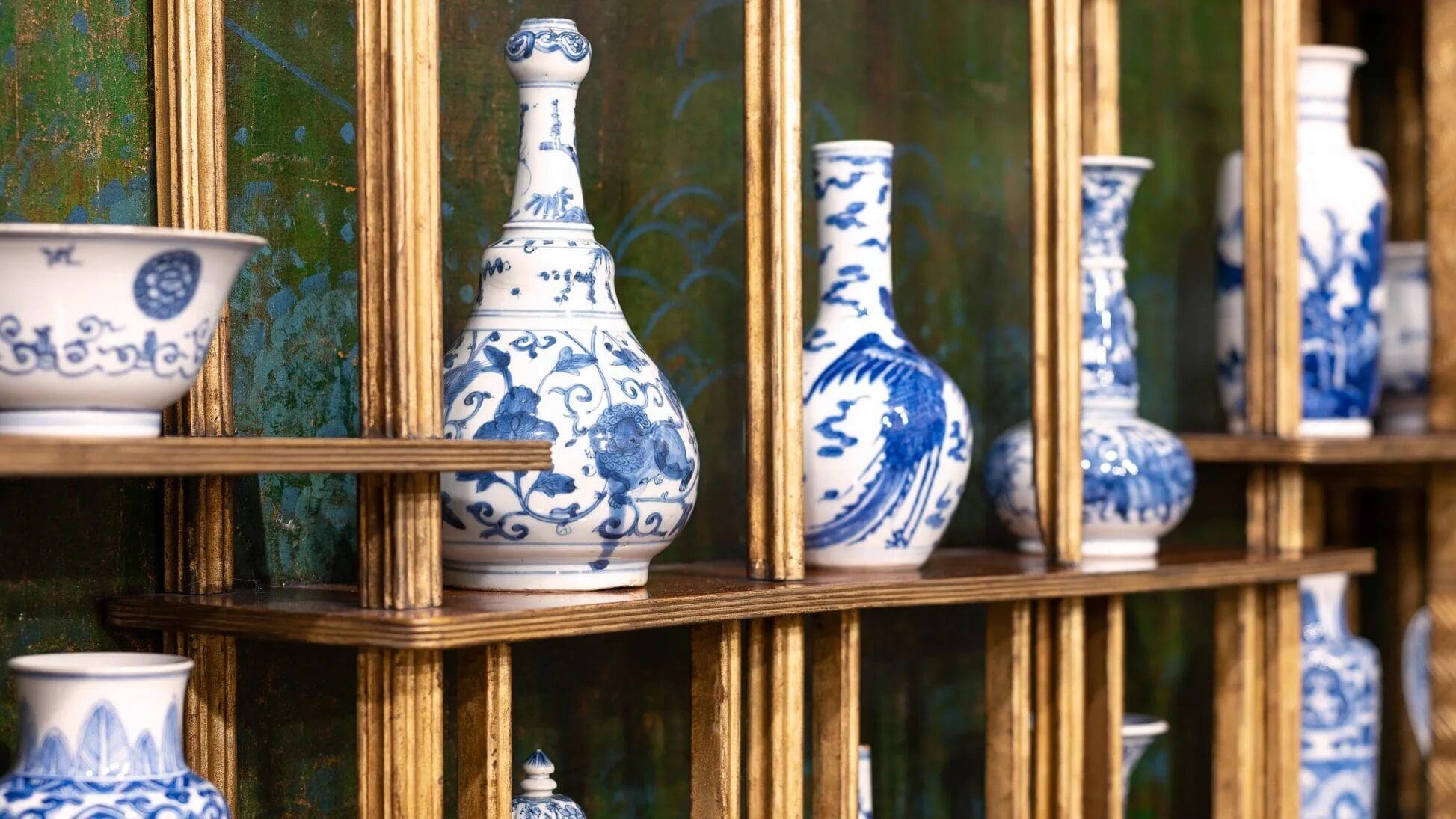
Inside Istanbul’s Topkapi Palace, in the old imperial kitchens that once fed the Ottoman court, sits one of the largest collections of Chinese porcelain outside China itself: more than 10,000 pieces in total, over 5,000 of them blue-and-white, almost all of it fired in the kilns of a single Chinese town. None of it was made for Turkey. It arrived over centuries as tribute, as trade, as diplomatic gift, and it simply never left. Versions of that same story sit in a stately home in England, a museum in Singapore, an antique gallery in Hong Kong. Walk into enough grand rooms around the world and eventually you’ll find the same pairing: cobalt blue against brilliant white. Blue-and-white porcelain crossed continents long before passports existed, riding merchant ships that linked China to Southeast Asia, the Middle East, Africa and Europe. Along the way, it became one of history’s first truly global luxury goods: it shaped Dutch Delftware and Japanese Arita ware, inspired Ottoman Iznik ceramics, and left its mark on European interiors and dining tables alike. Few objects have travelled so far while staying so unmistakably Chinese.
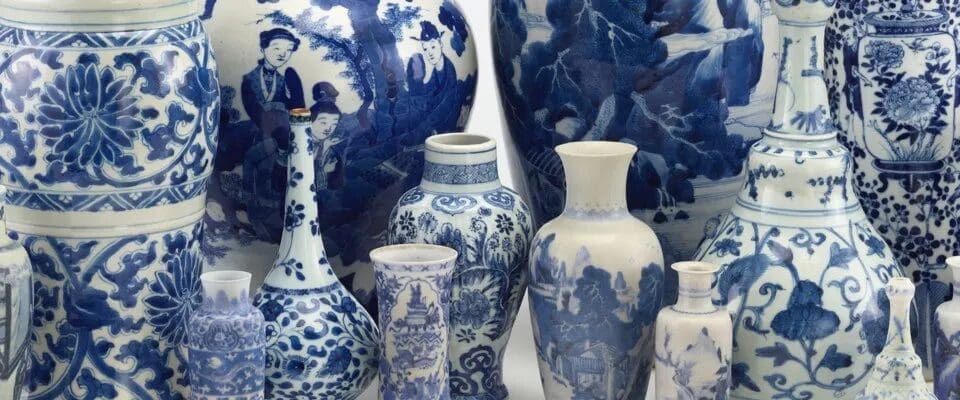
The story starts with an experiment nobody much liked at the time. In the ninth century, Tang-dynasty kilns at Gongyi in Henan began mixing local clay with cobalt pigment imported from the Abbasid world, making pieces for Middle Eastern buyers who wanted something no one else could offer. Back home in China, it didn’t catch on, and the style all but disappeared for centuries. It took the Yuan dynasty, and Persian cobalt in the hands of Jingdezhen’s potters, to turn that early experiment into mastery. Then came the Ming dynasty, and porcelain hit its golden age under the Yongle and Xuande emperors: rich sapphire-blue tones, and a “heaping-and-piling” effect where the imported cobalt, slightly impure, pooled and darkened under the glaze into something that became a signature rather than a flaw. The Qing dynasty pushed the craft further still. Under the Kangxi emperor, painters worked out fenshui, or “water separation”, precise enough to coax five distinct shades of blue out of a single pigment. It’s a technique practised and admired to this day.
Every road in this story leads back to Jingdezhen, in Jiangxi Province. China’s “Porcelain Capital” has been firing kilns for more than a thousand years, built on rich deposits of kaolin clay and porcelain stone, with a river network that once carried its wares out to the rest of the country and the world. It supplied emperors, met overseas demand, and produced techniques that were copied everywhere from Delft to Iznik but never quite equalled. On 25 July 2026, that history was formally recognised, when the Jingdezhen Handicraft Porcelain Industry Sites were inscribed on UNESCO’s World Heritage List at the 48th session of the World Heritage Committee in Busan, South Korea. UNESCO’s citation didn’t treat the city as a museum piece: it recognised a living cultural landscape, its ancient kilns, workshops, mining sites and waterways all remaining in active use. China has other celebrated ceramic centres too, including Dehua in Fujian for its pale Blanc de Chine, Longquan in Zhejiang for celadon, and Yixing in Jiangsu for its purple-clay teapots, but for blue-and-white, Jingdezhen has no real rival.
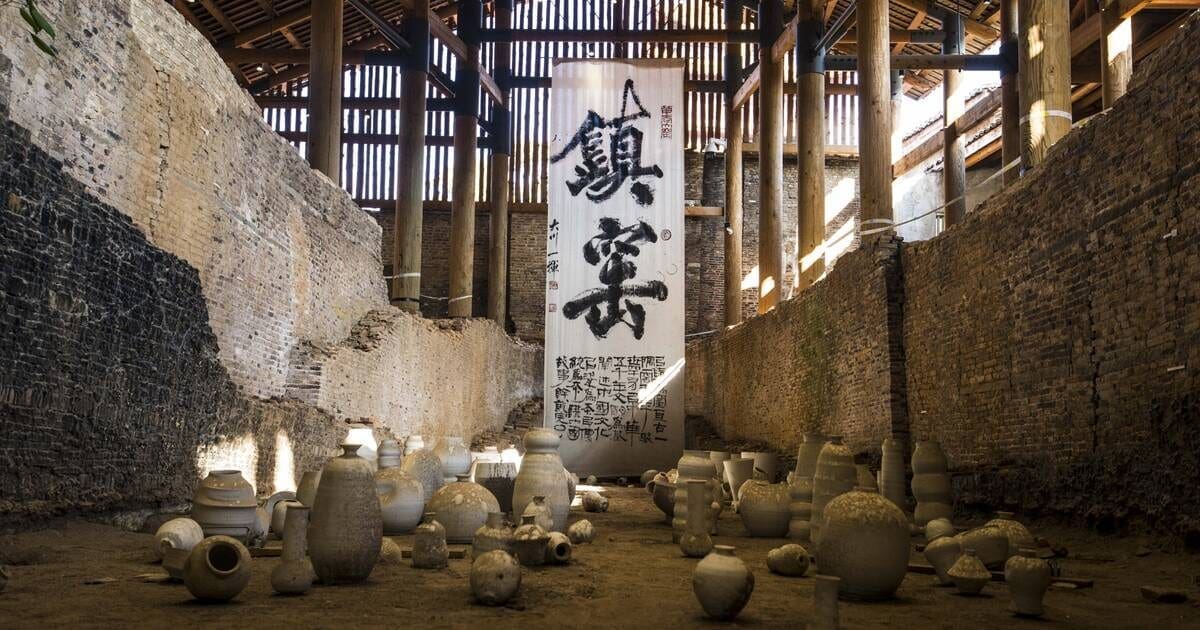
Ask anyone in Jingdezhen what the city’s greatest treasure is, though, and porcelain is only half the answer. The other half is its people. Making a single piece takes patience on a scale most of us have forgotten how to practise: kaolin clay and porcelain stone, refined and shaped by hand, before an artist paints a freehand design in cobalt oxide directly onto the unfired body. Glaze goes on next, then the kiln — temperatures past 1,300°C, hot enough that the dull grey pigment underneath turns, almost like a trick, into the vivid blue collectors have chased for centuries. Every motif carries meaning, too. A dragon means imperial authority. A lotus means purity, a peony prosperity. Pine, bamboo and plum together form the “Three Friends of Winter,” an old symbol of resilience and integrity. None of it is just decoration — it’s Chinese philosophy, painted in cobalt. And in Jingdezhen, much of this knowledge travels the oldest way there is: many workshops remain family-run, skills handed from grandparent to grandchild, one generation teaching the next to hold the brush.
Few artisans shaped modern Chinese ceramics more than Wang Xiliang (1922–2023), one of the first ceramicists in China to earn the national title of Ceramic Art Master. Born and raised in Jingdezhen, he treated blue-and-white porcelain the way a painter treats canvas, covering it in sweeping mountain landscapes whose brushwork earned him admirers well beyond China. His pieces sit today in museums and private collections, and his influence carries through the work of ceramic artists who came after him — among them Professor Ning Gang, President of Jingdezhen Ceramic University, who carries that legacy forward alongside thousands of contemporary makers mixing old craft with new ideas. On weekends at Taoxichuan Creative District — a former state porcelain factory turned into one of China’s liveliest creative hubs — young ceramicists known locally as “Jingpiao” set up and sell their work straight to the people walking through. Old tradition, new buyers, barely any gap between them: proof enough that blue-and-white porcelain isn’t finished yet.
That energy at Taoxichuan is part of something bigger happening across China. Guochao, or “China chic,” has given younger generations the confidence to embrace traditional aesthetics on their own terms, and blue-and-white motifs are turning up in places they never used to — on fashion runways, in jewellery, across luxury hotel lobbies, boutique cafés, premium packaging, contemporary interiors. Designers are reworking imperial patterns for modern homes; international hospitality brands are commissioning Jingdezhen artisans directly, for hotels and restaurants that want something no factory catalogue can offer. Blue-and-white porcelain didn’t have to fight modern design for a place at the table. It simply became part of the table — heritage that evolved without losing itself.
For anyone who wants to see all this firsthand, Jingdezhen itself is still the best place to start. The Jingdezhen Ceramic Museum and the Ancient Kiln Folk Customs Museum walk you through the city’s shift from imperial production centre to living cultural capital, and Taoxichuan Creative Market is where you actually meet the artists and buy from them directly. Serious collectors tend to end up in Hong Kong, where Sotheby’s, Christie’s and the dealers along Hollywood Road remain the centre of gravity for Chinese ceramics; Beijing and Shanghai have respected antique markets of their own, though experts are consistent on one point — chase documented provenance, not reign marks, since the best reproductions of Ming and Qing pieces are good enough to fool almost anyone. Beyond China, the fullest collections sit in Singapore’s Asian Civilisations Museum, Beijing’s Palace Museum, the Shanghai Museum, Taipei’s National Palace Museum, and London’s British Museum and Victoria and Albert Museum — each holding a different chapter of porcelain’s journey across the world.
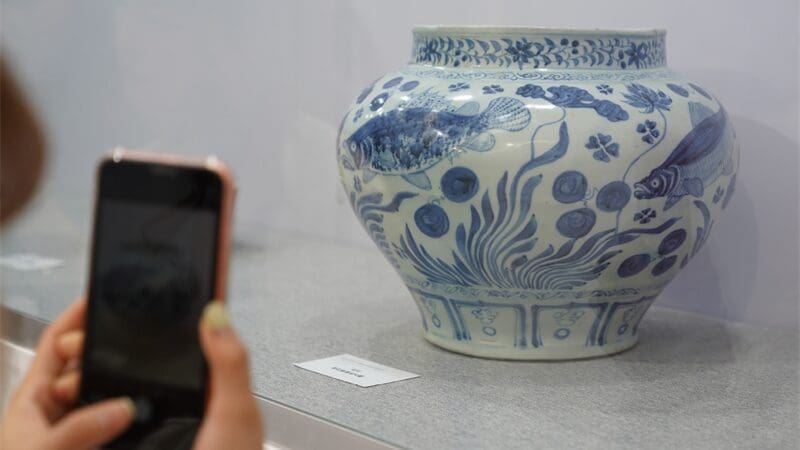
For Singapore, none of this is a story about somewhere else. Earlier this year, archaeologists confirmed that the Temasek Wreck, sitting in Singapore’s own waters, holds the largest cargo of Yuan-dynasty blue-and-white porcelain ever recovered from a single shipwreck. It dates to the mid-fourteenth century — evidence that Temasek was already a serious international trading port, moving Chinese ceramics through regional networks centuries before modern Singapore existed. That thread hasn’t broken. Contemporary collaborations like Singapore Blue still work directly with Jingdezhen artisans today, a sign that the Singapore and China relationship is tied together by porcelain that hasn’t cooled off in over six centuries.
None of this fascination is cooling off, either. The celebrated Chenghua “Chicken Cup” still holds the record as the most expensive Chinese porcelain ever sold at auction, and imperial pieces from the Yongle, Xuande and Kangxi periods keep commanding extraordinary prices at every major sale. Collectors are paying for more than rarity — for craftsmanship, provenance, the quality of the cobalt itself, and whatever story a given piece can still tell. But the real achievement of blue-and-white porcelain was never about auction records. It’s one of the earliest working examples of cultural diplomacy there is: proof that art can travel further than armies, and that a good idea, carried in the right hands, can do more than politics or commerce ever could alone. More than a thousand years after the first cobalt brushstroke met white clay, that’s still true. Dynasties have risen and fallen since. Ships carrying it have gone down to the bottom of the sea, only to resurface centuries later, off the coast of a country that didn’t exist yet when they sank. And on any given weekend in Taoxichuan, someone is still buying a piece straight from the hands that made it — recognisably the same idea, still stopping people in their tracks.
Sources & References:
• UNESCO World Heritage Centre, “Jingdezhen Handicraft Porcelain Industry Sites�
• Topkapi Palace Museum
• People’s Daily reports on the UNESCO inscription of Jingdezhen Handicraft Porcelain Industry Sites
Written by Charoline Charity Chandra