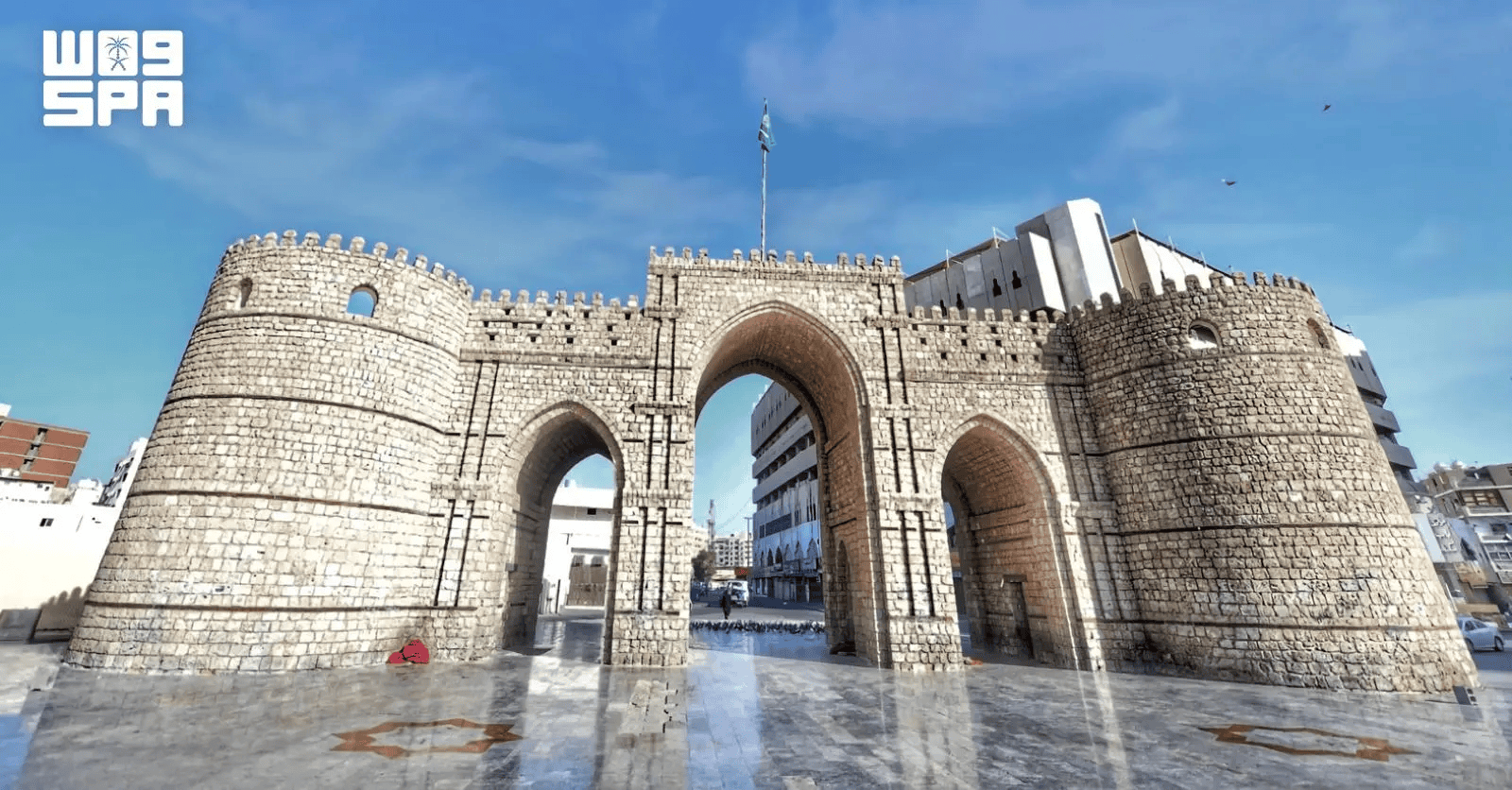
Jeddah’s historic gates once guided pilgrims, merchants and goods through the city.
The gates of Jeddah鈥檚 former city wall served as important entry and exit points for pilgrims, merchants, caravans and goods as the Saudi Arabian port city developed. They regulated movement into and out of Jeddah as the city grew in prominence as a gateway for pilgrims travelling to Makkah and as a commercial centre connected to Red Sea and Indian Ocean trade routes.
The city wall was built to protect Jeddah from threats approaching by land and sea. It was reinforced with towers and other defensive structures and was surrounded by a protective moat. The wall originally had seven gates, including Bab Makkah, Bab Sharif and Bab Al-Madinah, which provided access to routes leading towards Makkah and Madinah.
Bab Makkah served as one of the principal entrances to the city, reflecting Jeddah鈥檚 role as an arrival point for pilgrims travelling towards Makkah. Bab Al-Madinah connected the city with the route leading towards Madinah, while the other gates supported movement associated with the city鈥檚 commercial and daily activities.
As commercial activity expanded and transportation methods changed, Jeddah required an additional gateway capable of accommodating vehicles. Bab Jadid was subsequently introduced, increasing the total number of gates from seven to eight.
The city wall remained part of Jeddah鈥檚 urban landscape until 1947, when it was removed as the city expanded. The removal reflected the physical growth of Jeddah and changes in transportation and movement within the city.
Some of the former gates, including Bab Makkah and Bab Jadid, survived the removal of the wall. They remained as reminders of the city鈥檚 former entrances and of the routes once used by pilgrims, merchants and caravans.
The surviving gates also remain associated with Jeddah鈥檚 old neighbourhoods and traditional markets, preserving links to a period when the city鈥檚 entrances played a practical role in managing movement, trade and pilgrimage. Their presence provides a connection to the city鈥檚 earlier urban layout and its role as a port and commercial centre on the Red Sea.
Source: Saudi Press Agency